
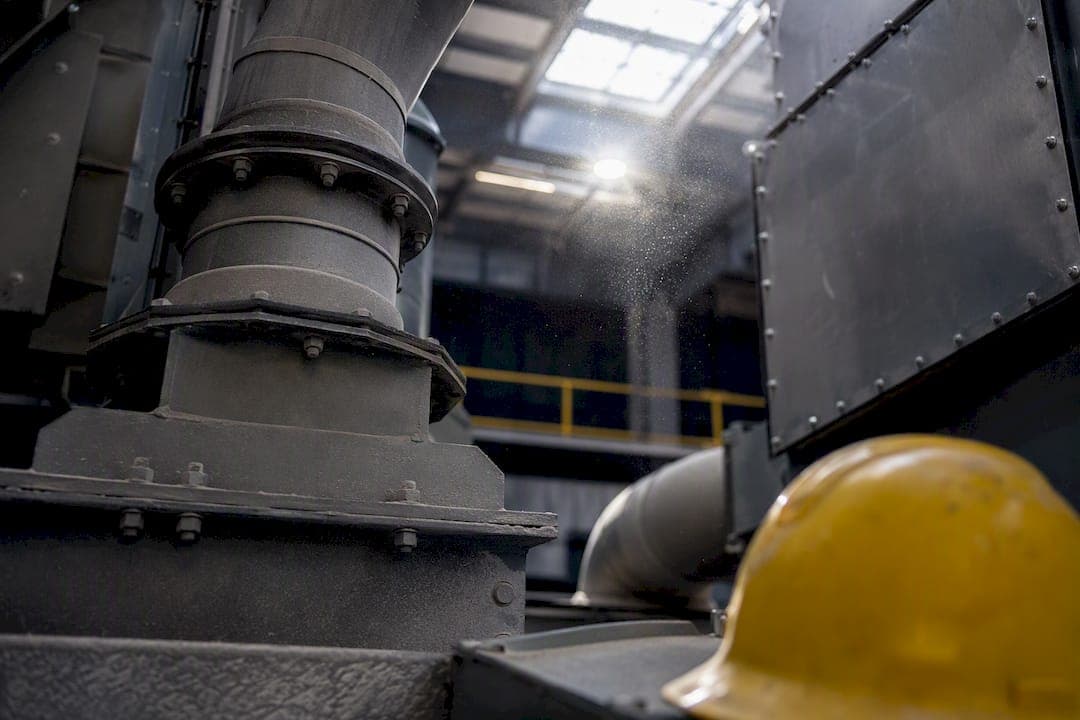
Dust explosion prevention comes down to one engineering fact: eliminate or control any single element of the dust explosion pentagon (fuel, oxygen, ignition source, dispersion, confinement) and the explosion cannot happen. That's the whole game. If your site has combustible dust, your first move today is simple.
- Commission a documented risk assessment by a competent person
- Physically remove visible dust deposits from ledges, rafters and hidden voids now
- Map controls into four categories: inherent design changes, operational controls, engineered protection, verification
Pro Tip: A dust deposit as thin as 0.3mm across a ceiling or rafter can fuel a secondary explosion severe enough to bring a building down. Housekeeping isn't a nice-to-have here. It's a control measure.
Key Takeaways
Dust explosion prevention succeeds when any single element of the fire pentagon (fuel, oxygen, ignition, dispersion, confinement) is removed or controlled through inherently safer design, engineering controls, and verified protection systems.
| Point | Details |
|---|---|
| Target the pentagon | Removing or controlling fuel, oxygen, ignition, dispersion or confinement stops an explosion outright. |
| Test material properties | Get MIE and KSt values from an accredited lab before designing any protection system. |
| Housekeeping stops secondary events | Even a 0.3mm dust layer can fuel a catastrophic secondary explosion, so HEPA vacuuming beats compressed air every time. |
| Verify, then re-verify | Recheck vents, earthing and suppression systems after any incident, process change or equipment swap. |
| Commission proper assessment | Safety-engineering delivers competent-person risk assessments, zoning diagrams and verification reports for New Zealand facilities. |
Table of Contents
- What is dust explosion prevention and how does the pentagon work?
- Who should carry out a combustible dust risk assessment?
- Which prevention controls actually stop dust igniting?
- Venting, suppression, containment or isolation: which protection method fits?
- How do you turn a housekeeping policy into daily practice?
- What standards and verification checks should you follow?
- What training and drills actually build competence?
- How does Safety-engineering support competent-person dust risk work?
- Why documented verification beats a compliance checklist
- Get a competent-person dust risk assessment done properly
- Sources
What is dust explosion prevention and how does the pentagon work?
Forget the fire triangle you learned in basic safety training. Dust needs two extra conditions before it detonates, which is why the five-sided model matters more in practice than in theory.
- Fuel — a combustible powder fine enough to ignite (wood, flour, aluminium, sugar, coal, many plastics)
- Oxygen — normal air is enough
- Ignition source — a spark, hot surface, static discharge or friction heat
- Dispersion — the dust must be airborne as a cloud, not sitting in a pile
- Confinement — an enclosed or partially enclosed space that lets pressure build
Two numbers decide how dangerous a given dust actually is. Minimum Ignition Energy (MIE) measures how little spark energy is needed to set a dust cloud alight, sometimes as low as a few millijoules for fine organic powders. KSt, the deflagration index, tells you how violently the explosion develops once it starts, and it's what engineers use to size vent panels correctly. Neither figure can be guessed. Send a representative sample to an accredited testing laboratory and get both values before you design any protection system.
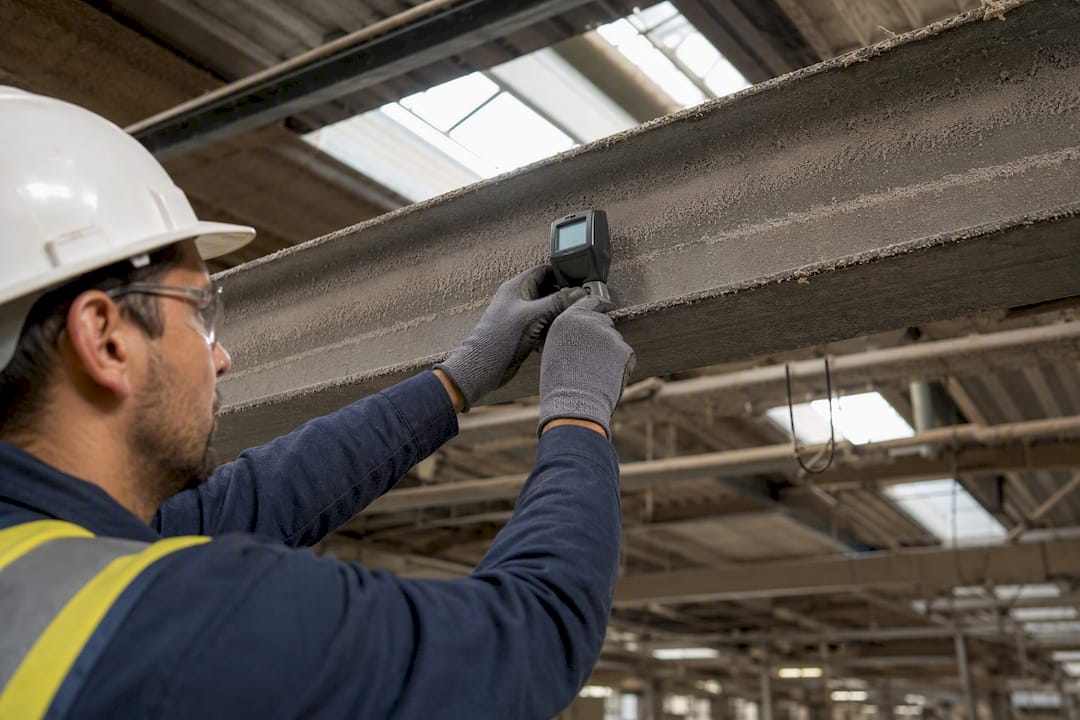
Secondary explosions are usually the real killer. A small primary event inside a duct or hopper throws up settled dust elsewhere in the building, and that airborne cloud is what causes the catastrophic damage. Peer-reviewed process safety literature notes that a layer as thin as 0.3mm across a wide enough surface carries sufficient fuel load for a devastating secondary blast. That's roughly the thickness of a coin's edge, spread across every rafter in your roof space.
Who should carry out a combustible dust risk assessment?
A dust explosion risk assessment has to be written, systematic and carried out by someone with genuine competence in combustible dust behaviour, not a generalist safety officer working from a template. The assessment needs to reach into places most audits skip: dust collectors, ductwork interiors, false ceilings, and any equipment connected to a process that handles fine particulate.
A properly scoped assessment covers:
- Material characterisation — confirm MIE, KSt, particle size distribution and moisture content for every dust type on site
- Dispersion mapping — identify every point where dust becomes airborne, from transfer points to leaking seals
- Ignition source survey — electrical equipment, hot work areas, mechanical friction points, static-prone plastics and conveyors
- Consequence modelling — work through both primary explosion scenarios and the secondary events they could trigger
- Zoning classification — define hazardous area boundaries so electrical and mechanical equipment specification matches the actual risk
The deliverables matter as much as the process. You should walk away with a hazardous area zoning diagram, a control register that assigns an owner and a deadline to every identified risk, and a verification and testing schedule that says exactly when each protection measure gets checked again.
Pro Tip: Don't let the assessment stop at the process equipment boundary. Hidden voids above suspended ceilings and inside cable trays accumulate dust nobody inspects for years, and that's exactly where secondary explosions gather their fuel.
OSHA's guidance on combustible dust reinforces this scope, recommending a thorough hazard assessment paired with an ongoing inspection programme rather than a one-off audit that gathers dust itself.
Which prevention controls actually stop dust igniting?
Prevention works best when you follow the hierarchy of controls: eliminate the hazard first, engineer around what's left, then rely on people to do the rest correctly every shift. Too many facilities skip straight to the third tier because it's cheaper up front, and pay for it later.
Inherently safer design sits at the top for good reason. Process-safety research consistently finds that substitution and process redesign remove the hazard rather than manage it. Practical examples:
- Switching a fluid-bed drier for a tray drier reduces dust cloud formation and can shrink the hazardous area classification around the equipment
- Wet processing keeps material below the moisture threshold where it becomes explosible
- Granulation increases particle size so the dust no longer meets the MIE and KSt thresholds that make it a hazard
- Enclosing a process to eliminate open transfer points removes the dispersion pathway entirely
Engineering controls come next when elimination isn't achievable:
- Leak-free transfer systems at every connection point, not just the obvious ones
- Local exhaust ventilation and extraction hoods positioned at the actual dust-generation point
- Cyclone separators and enclosed conveyors that keep material contained between process steps
- Wet scrubbers for particularly fine or explosible dusts where dry filtration carries higher risk
Operational measures are where most facilities actually fail, not because the policy is missing but because it's never enforced consistently:
- A written housekeeping regime with defined frequencies and approved cleaning methods
- HEPA-filtered industrial vacuums as the standard tool, never compressed air, which simply redistributes dust into a fresh airborne cloud
- Hot-work permit systems that require a dust check before any welding, cutting or grinding starts
- Bonding and earthing on every conveyor, duct and storage vessel to drain static charge before it becomes an ignition source
Inerting deserves a mention here too. Introducing nitrogen or CO2 to displace oxygen below the limiting concentration is a legitimate prevention strategy, but it demands gas-tight system design specific to the dust chemistry and operating temperature involved. It's not a retrofit you bolt on casually.
Venting, suppression, containment or isolation: which protection method fits?
Once prevention controls are in place, you still need protection for the residual risk, because no system removes every ignition source or dispersion event completely. The four engineered protection methods each suit different equipment types and site constraints.
Explosion venting releases pressure through a weak panel before the vessel ruptures. It works well on dust collectors, silos and mills where you can duct the discharge to a safe outdoor location away from walkways and air intakes. Flameless venting units are worth specifying indoors, where ducting a conventional vent outside isn't physically possible, because they quench the flame front while still relieving pressure.
Explosion suppression detects the earliest pressure rise or a spark inside the vessel and injects a suppressant within milliseconds, before the deflagration develops into a full explosion. Trigger technologies include infrared spark detectors positioned at duct inlets and pressure-rise sensors calibrated to the specific KSt value of the material inside.
Containment uses pressure-rated vessels designed to withstand the maximum expected explosion pressure without rupturing. It suits smaller, high-value process equipment where venting to atmosphere isn't practical or where the material itself is too hazardous to discharge externally.
Isolation stops flame and pressure propagating from one piece of equipment into connected ductwork or vessels. Chemical isolation, fast-acting valves and rotary valves each interrupt that pathway, and they're often the difference between a contained incident in one unit and a chain reaction through an entire dust-handling system.
| Protection method | Best suited to | Key limitation |
|---|---|---|
| Venting | Silos, mills, dust collectors with outdoor discharge access | Needs a safe discharge path away from personnel |
| Flameless venting | Indoor equipment with no ducting route outside | Higher unit cost than standard vent panels |
| Suppression | High-value equipment, enclosed spaces, indoor installations | Requires functional testing and suppressant replacement |
| Containment | Compact process vessels, hazardous materials | Adds significant vessel weight and cost |
| Isolation | Ductwork connecting multiple pieces of equipment | Doesn't prevent the initial explosion, only its spread |
HSG103 sets out detailed design guidance for each of these methods, including how vent discharge locations must be verified in the field, not just on paper.
How do you turn a housekeeping policy into daily practice?
A housekeeping programme that lives in a folder achieves nothing. It has to specify who cleans what, how often, using which approved method, and where that gets logged.
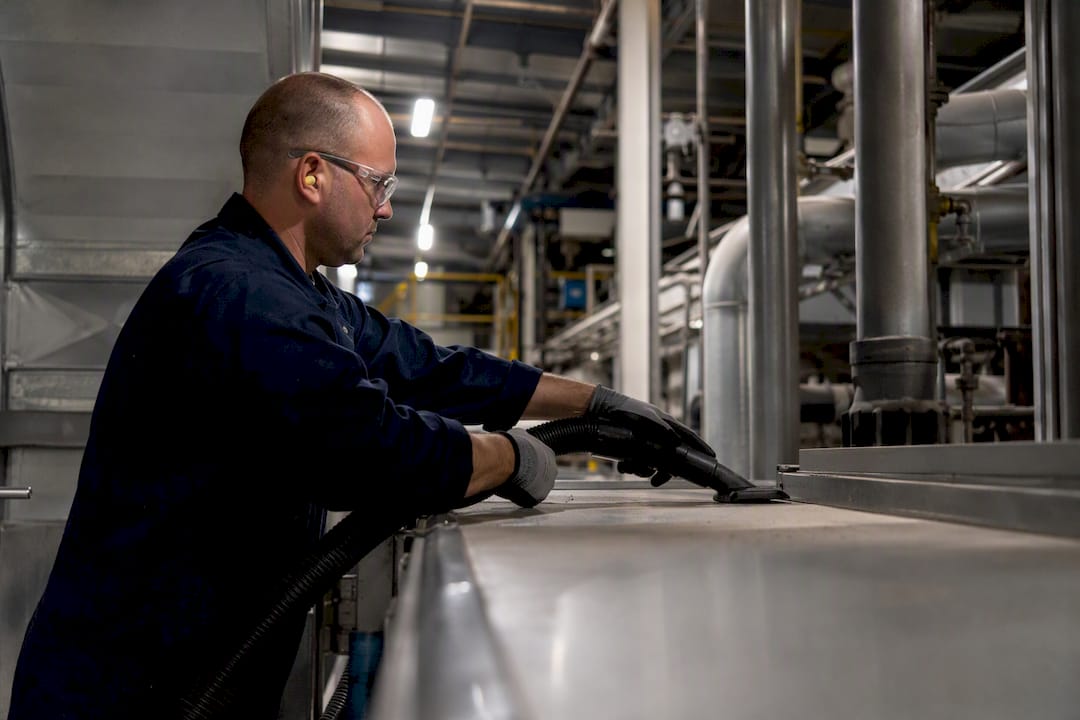
Build the written programme around three fixed elements: cleaning frequency tied to actual dust generation rates rather than a generic weekly slot, approved methods that specify HEPA vacuuming as standard, and a recordkeeping system that timestamps every completed clean.
Your inspection checklist should physically cover:
- Horizontal ledges, beams and rafters above head height, where dust settles unseen for months
- Duct interiors and elbow joints, where deposits build fastest due to airflow turbulence
- Conveyor undersides and transfer points, checked at every shift change
- Filter media condition and pressure differential across dust collectors
- Hidden voids behind false walls and above suspended ceilings, inspected on a fixed quarterly schedule at minimum
Track a small set of KPIs: days since last full inspection, number of open housekeeping non-conformances, and filter pressure drop trend over time. A rising pressure differential across a dust collector filter usually signals a maintenance issue building toward failure, not just reduced airflow efficiency.
Maintenance schedules for dust-collection systems need to specify filter replacement intervals, earthing continuity checks on every bonded component, and a functional test of any suppression system installed downstream.
Pro Tip: Never authorise compressed air for cleaning dust deposits. It's the single most common way a routine clean turns a settled deposit into an airborne fuel source right next to whatever ignition source happens to be nearby.
What standards and verification checks should you follow?
Three reference documents anchor almost every serious combustible dust programme. HSG103 from the HSE covers prevention and mitigation measures in detail, including dust cloud control, venting, suppression, inerting and the competent-person verification requirement that underpins the whole framework. NFPA standards, particularly NFPA 654 for general combustible dust and NFPA 652 as the fundamentals code, specify design, maintenance and documentation practices used across industrial facilities. ISO guidance documents complement both with international testing methodologies for dust explosibility.
Before any protection system goes into service, and periodically afterward, a competent person needs to verify:
- Vent panel integrity and correct discharge orientation to a safe area
- Electrical classification matches the actual hazardous area zoning on record
- Earthing and bonding continuity across every connected component
- Airflow measurements confirming extraction systems perform to design specification
- Functional testing of suppression system triggers and suppressant charge levels
Re-verification isn't optional after any incident, however minor, or after any major process change, equipment replacement, or material substitution. A system verified for one dust type can fail against a different material with a lower MIE or higher KSt entirely.
What training and drills actually build competence?
Training that covers hazard awareness in a slideshow once a year produces compliance paperwork, not competent staff. Real competence needs repeated, scenario-based practice tied directly to your site's actual equipment and materials.
Core training modules should include:
- Hazard awareness specific to the dusts handled on site, not generic combustible dust theory
- Ignition control practices, covering hot-work permits, static bonding checks and equipment lockout before maintenance
- Safe cleaning procedures, with hands-on HEPA vacuum practice and an explicit ban on compressed air
- Hot-work management, including pre-work dust surveys and fire watch requirements
- Shutdown and evacuation procedures for a confirmed dust incident, escalating through to secondary explosion response
Drills need to go beyond a fire alarm walkout. Design scenarios that force teams to consider escalation, what happens if a primary event in a dust collector disturbs settled deposits elsewhere in the building, and how the evacuation plan changes when a secondary explosion becomes a realistic possibility. Run these quarterly at minimum, with a genuine debrief that feeds back into the risk assessment rather than a box-ticking exercise.
Keep training records that link directly to specific action items from the risk assessment. If the assessment flagged a static control gap on a particular conveyor, the training record for staff working that line should show they've been briefed on the fix.
How does Safety-engineering support competent-person dust risk work?
Safety-engineering carries out the competent-person risk assessments that HSG103 and NFPA standards both call for, working through zoning, verification and design support for the protection systems this guide covers.
- Documented combustible dust risk assessments covering material testing referral, dispersion mapping and consequence modelling
- Hazardous area zoning diagrams and a control register with assigned owners and deadlines
- Design support for venting, suppression and isolation systems matched to your actual KSt and MIE values
- Site-specific training programmes built around your equipment, not generic slide decks
Typical deliverables include a written housekeeping regime, a verification report you can hand to insurers or auditors, training completion records, and an equipment compliance check against current standards.
Pro Tip: If your last dust risk assessment predates a process change, equipment swap, or new material on site, treat it as expired. A site assessment tailored to your current operation is the only way to know your actual exposure.
Why documented verification beats a compliance checklist
Most dust safety advice treats the risk assessment as a one-time compliance exercise, something you complete, file, and revisit only when an auditor asks. That's the wrong mental model, and it's why so many secondary explosions happen in facilities that technically passed their last inspection.
The pentagon framework is genuinely useful, but only if you treat verification as continuous rather than a stage you tick off. A vent panel installed correctly in 2023 tells you nothing about whether it still discharges to a safe area after a building extension changed the airflow around it. Standards like HSG103 and NFPA 654 exist precisely because informal judgement drifts over time, and drift is what kills people.
What I'd push back on is the industry habit of reaching for engineered protection before exhausting inherently safer design. Venting and suppression are excellent tools, but they manage a hazard that substitution or process redesign could have removed entirely. Prioritise elimination, document everything a competent person finds, and re-verify on a schedule you actually keep, not one you intend to keep.
— Safety
Get a competent-person dust risk assessment done properly
Everything in this guide points to the same conclusion: prevention depends on a documented, competent-person assessment that gets re-verified as your process changes, not a generic checklist pulled off the internet. Safety-engineering carries out exactly that kind of assessment for New Zealand facilities handling combustible dust, working through material characterisation, zoning, and protection system design in one engagement rather than piecing it together from separate contractors.

What sets this apart from a standard compliance audit is the follow-through. You get a zoning diagram, a control register with real deadlines, and a verification schedule you can actually action, backed by engineers who design the venting, suppression, or isolation systems your site needs rather than just flagging that you need them. If your last assessment is more than a couple of years old, or your process has changed since it was written, get in touch through Safety Engineering Services to scope a site visit and find out exactly where your dust hazard controls stand today.